
Bathroom Remodel Frequent Questions
FAQ – Bathroom Remodel
Planning a bathroom remodel can feel both exciting and overwhelming. From budgeting and timelines to selecting tile, fixtures, and understanding permits, homeowners often have important questions before getting started. This Bathroom Remodel FAQ is designed to provide clear, practical answers so you can confidently plan your renovation and make informed decisions for your home.
How Much Does a Bathroom Remodel Cost in Philadelphia?
Bathroom remodeling costs in Philadelphia typically range from:
$10,000 – $18,000 for a standard bathroom remodel
$18,000 – $30,000+ for a mid-range renovation
$30,000 – $60,000+ for luxury or master bathroom remodels
How Long Does a Bathroom Remodel Take?
Most bathroom remodeling projects take:
2–3 weeks for cosmetic updates
3–5 weeks for full renovations
5–8 weeks for larger master bathroom remodels with layout changes
Do I Need a Permit to Remodel My Bathroom in Philadelphia?
In many cases, yes. If your bathroom remodel involves moving plumbing lines, upgrading electrical systems, or modifying walls, permits are required to meet local building codes.
Our team handles all permits and inspections to ensure your renovation is compliant and stress-free.
What Adds the Most Value in a Bathroom Remodel?
If you’re remodeling for resale value, focus on:
Walk-in showers with frameless glass
Double vanities
Modern tile work
Energy-efficient fixtures
Updated lighting
Neutral color palettes
Bathroom renovations typically offer one of the highest returns on investment among home improvements.
What is included in a full bathroom remodel?
A complete bathroom renovation typically includes demolition, plumbing and electrical updates, tile installation, shower or bathtub installation, vanity replacement, lighting upgrades, and finishing work.
We manage the entire process from design planning to final walkthrough to ensure quality craftsmanship and smooth execution.
Is a walk-in shower better than a bathtub?
Walk-in showers are one of the most requested upgrades in today’s bathroom remodels. They create a cleaner, more modern appearance and offer easier accessibility compared to traditional tubs.
Because they take up less visual space, they can make the bathroom feel larger and more open. Many buyers also prefer homes with at least one updated walk-in shower, which can improve resale appeal.
However, if your home only has one bathroom, keeping a bathtub may still be beneficial for long-term value.
Bathroom Interior Design Questions
What is included in bathroom interior design?
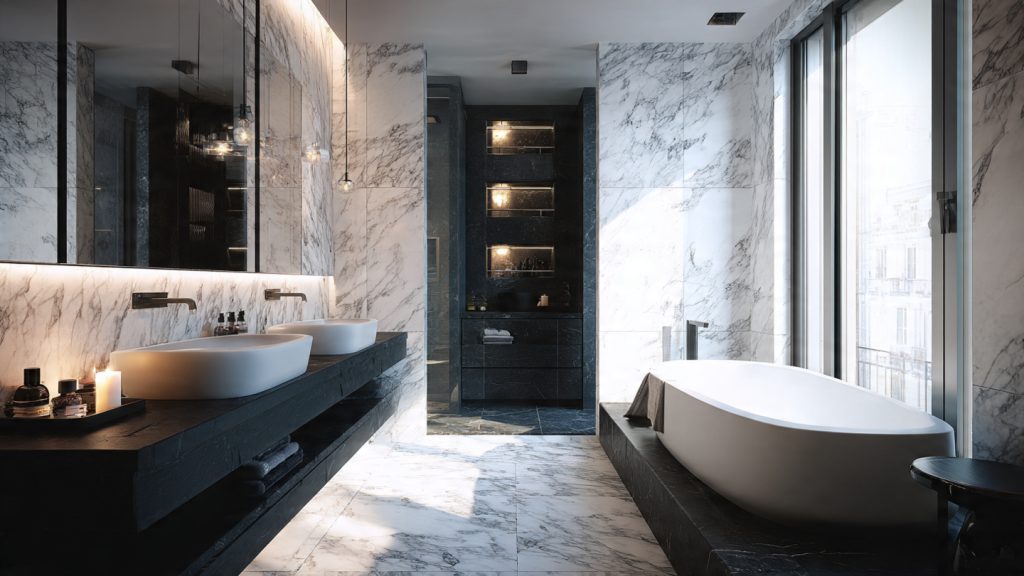
Bathroom interior design goes beyond selecting finishes. It involves planning the layout, choosing materials, optimizing lighting, improving storage, and creating a cohesive style that fits your home.
A well-designed bathroom balances function and aesthetics ensuring proper spacing, efficient plumbing placement, durable materials, and a clean visual flow.
What are the most popular bathroom design styles right now?
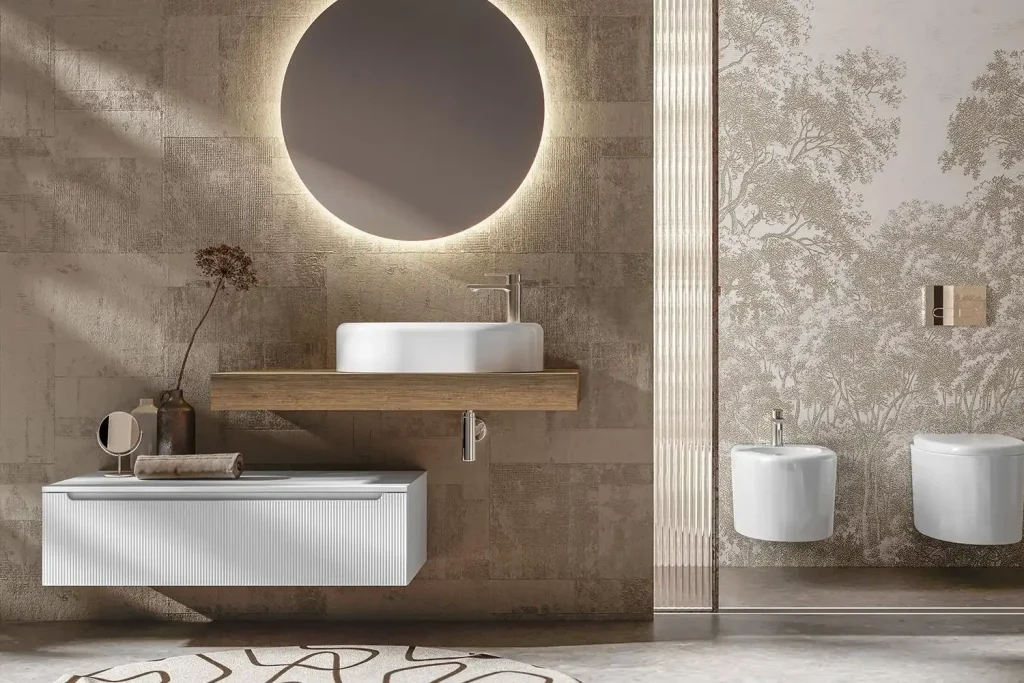
Homeowners in Philadelphia are gravitating toward clean, timeless styles such as modern minimalist, transitional, and spa-inspired designs.
Popular elements include neutral color palettes, natural wood accents, matte black or brushed gold fixtures, large-format tile, and layered lighting. The key is choosing finishes that will remain stylish for years to come.
How do I design a bathroom that feels bigger?
To make a bathroom feel more spacious, focus on visual openness and smart layout choices. Light-colored walls and tile reflect more light, while floating vanities create visible floor space.
Frameless glass showers eliminate visual barriers, and large mirrors enhance depth and brightness. Even small design adjustments can dramatically change how the space feels.
How important is lighting in bathroom design?
Lighting is one of the most important elements of bathroom interior design. A combination of overhead lighting, task lighting around mirrors, and accent lighting creates both functionality and atmosphere.
Proper lighting improves daily routines like shaving and makeup application while also enhancing the overall design impact.
Bathtub Design Questions
What type of bathtub is best for my bathroom layout?
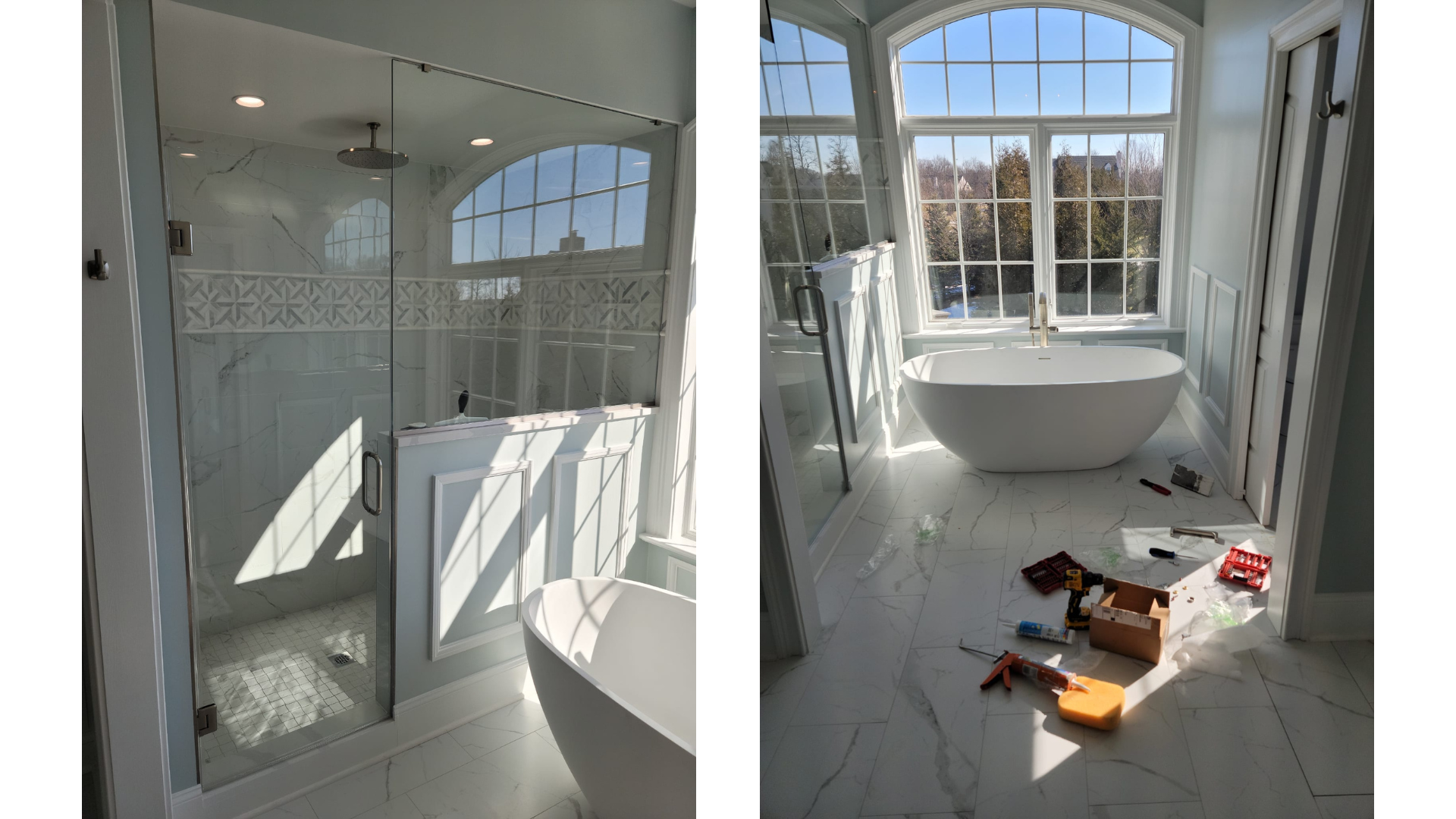
The best bathtub depends on your available space, plumbing configuration, and design goals. Alcove tubs are ideal for smaller bathrooms and standard layouts, while freestanding tubs create a focal point in larger master bathrooms.
Drop-in and corner tubs work well when you want a built-in look or need to maximize limited space. During the design phase, we evaluate layout efficiency, clearances, and visual balance before recommending the right option.
What materials are best for bathtub durability?
Common bathtub materials include acrylic, fiberglass, cast iron, and solid surface composites.
Acrylic is popular because it’s lightweight, affordable, and easy to maintain. Cast iron is extremely durable and retains heat well but requires stronger floor support. The right material depends on your budget, structural conditions, and long-term maintenance expectations.
Is keeping a bathtub important for resale value?
In most homes, especially those with multiple bathrooms, keeping at least one bathtub is recommended. Families with children often prefer homes with a tub option.
If you’re converting a tub to a shower, it’s important to consider how many bathtubs remain in the home to maintain long-term resale appeal.
Are freestanding bathtubs practical or just decorative?
Freestanding tubs offer both function and style. They create a luxury, spa-like atmosphere and can increase resale appeal, especially in master bathroom remodels.
However, they require more floor space and proper plumbing placement. When installed correctly, they are just as durable and functional as traditional built-in tubs.
How do I design a bathtub area that feels luxurious?
Luxury bathtub design focuses on details. Accent tile walls, floor-mounted tub fillers, built-in niches, and layered lighting elevate the entire space.
Adding natural textures, warm finishes, and proper spacing around the tub enhances comfort and visual impact without overcrowding the bathroom.
Can I replace my bathtub without changing the entire layout?
Yes, in many cases a bathtub can be upgraded without relocating plumbing. Keeping the existing drain and supply lines in place reduces labor costs and shortens project timelines.
If you’re looking for a major design change such as switching to a freestanding tub minor plumbing adjustments may be required.
Bathroom Tiling Questions
What is the best type of tile for bathroom floors?
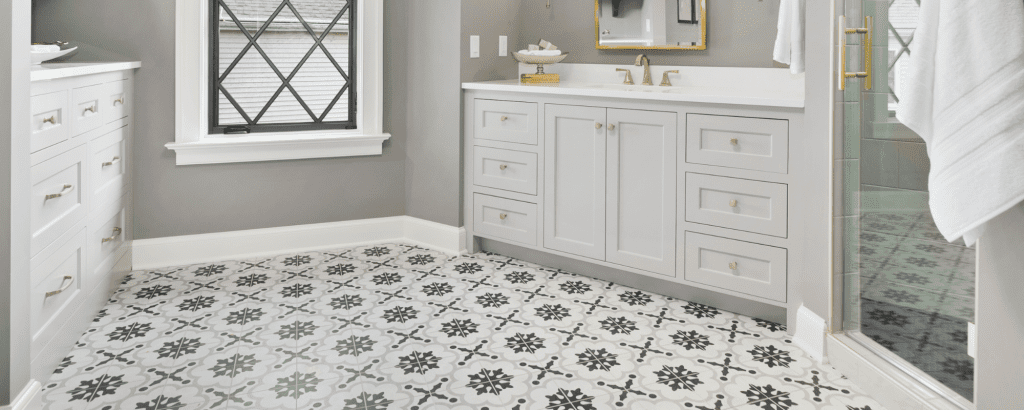
Porcelain tile is considered the best option for bathroom floors because it is highly water-resistant, durable, and low maintenance. Ceramic tile is another affordable and reliable option, while natural stone offers a premium look but requires more upkeep.
Value Tip: Always choose tiles with a slip-resistant rating for bathroom floors to improve safety, especially in homes with children or seniors.
How much does bathroom tile installation cost?
Bathroom tile installation typically ranges between $10 and $35 per square foot, depending on tile material, layout complexity, and preparation work. Custom patterns like herringbone or mosaic designs increase labor costs.
How long does bathroom tile last?
When installed correctly with proper waterproofing, bathroom tile can last 20 years or more. The longevity depends on installation quality, subfloor preparation, and maintenance.
Value Tip: Regularly sealing grout lines helps prevent staining and mold buildup, extending the life of your tile installation.
Is large-format tile good for small bathrooms?
Yes, large-format tile can actually make a small bathroom feel bigger. Fewer grout lines create a cleaner, more seamless look, which visually expands the space.
However, proper installation is critical to prevent uneven surfaces.
Value Tip: Using the same tile on both the floor and shower walls creates continuity and makes the bathroom feel more open.
What tile is best for shower walls?
Porcelain and ceramic tiles are the most popular for shower walls due to their moisture resistance and design flexibility. Glass tile accents are often added for decorative appeal.
Natural stone can be used but requires sealing to prevent water absorption.
Should I retile my entire bathroom or just the shower?
If your floor tile is still in good condition, retile only the shower can refresh the entire bathroom at a lower cost. However, mismatched finishes may affect the overall look.
Value Tip: If your renovation budget allows, updating both the shower and flooring creates a more cohesive, modern design that increases resale value.
Bathroom Cabinet Replacement Questions
How much does it cost to replace bathroom cabinets?
Bathroom cabinet replacement typically ranges from $2,000 to $8,000 depending on size, materials, and whether you choose stock, semi-custom, or custom cabinetry. Countertops and plumbing adjustments can affect total cost.
What is the best material for bathroom cabinets?
Solid wood, plywood, and MDF with moisture-resistant finishes are common choices. Bathrooms require materials that can handle humidity and temperature changes.
Value Tip: Soft-close hinges and drawer slides not only add comfort but also extend the lifespan of your cabinets.
Is a double vanity worth it?
Double vanities are highly desirable in master bathrooms because they improve daily functionality for couples and families. They also enhance resale appeal.
Value Tip: Ensure there is adequate spacing between sinks to prevent overcrowding and maximize comfort.
Should I replace or reface my bathroom cabinets?
Refacing can be a cost-effective option if the cabinet boxes are structurally sound. However, full replacement allows you to improve layout, storage, and overall design. Value Tip: If your current vanity lacks storage or functionality, replacement is often a smarter long-term investment.
Are floating vanities a good idea?
Floating vanities create a modern look and make the bathroom feel more spacious by exposing more floor area. They also make cleaning easier.
However, proper wall reinforcement is necessary to ensure structural support.
Value Tip: Installing LED lighting underneath a floating vanity adds a subtle luxury effect.
How long does bathroom cabinet replacement take?
Most bathroom vanity replacements take 1 to 3 days if plumbing remains in place. Custom cabinetry may require additional lead time for fabrication.
Value Tip: Pairing cabinet replacement with updated lighting and a new mirror can dramatically elevate the final result without a full remodel.
Call us now at 267 203 4880 to schedule a consultation and let us help you turn your vision into reality we serve in Philadelphia and New Jersey.