
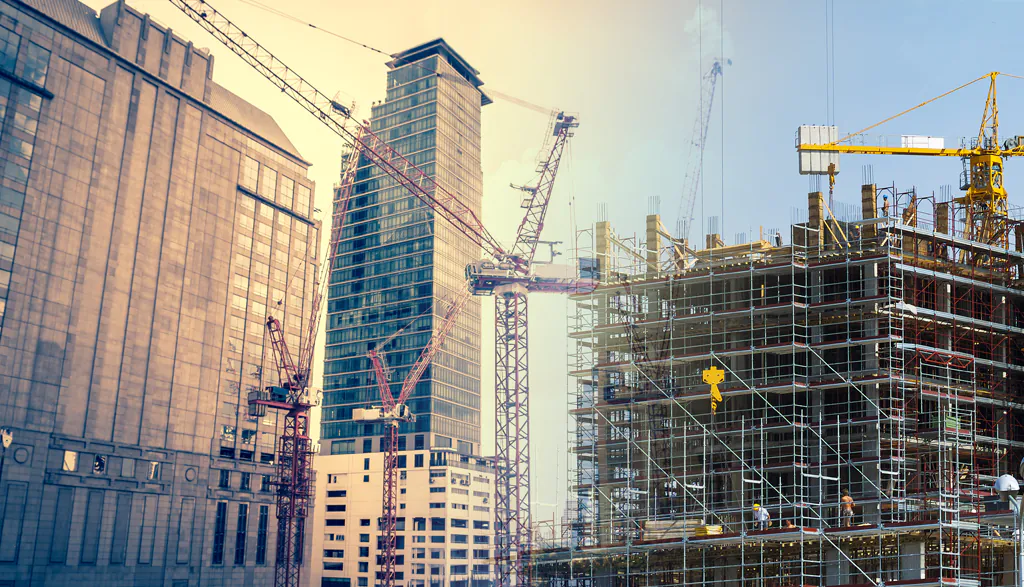
FAQ – Commercial Construction
Commercial construction projects involve strategic planning, budgeting, compliance, and coordination. Business owners and property managers often have questions about project timelines, building codes, permits, and minimizing operational disruptions. This Commercial Construction FAQ provides clear and practical information to help you understand the process and prepare for a successful build or renovation.
What types of commercial remodeling projects do you handle?
Commercial remodeling services can include office renovations, retail build-outs, tenant improvements, restaurant upgrades, medical office renovations, and full commercial construction projects.
Whether the goal is to modernize an existing space, improve workflow efficiency, or prepare a property for new tenants, commercial construction requires strategic planning and code compliance from start to finish.
How do you minimize business disruption during construction?
Minimizing operational downtime is a top priority in commercial remodeling. Projects can often be phased to allow businesses to remain partially operational. Scheduling after-hours work or weekend construction is also an option when feasible.
Clear communication, detailed timelines, and proactive coordination help reduce interruptions and keep your business running as smoothly as possible.
Value Tip: Early planning and defined project phases significantly reduce costly delays and downtime.
Do commercial remodeling projects require permits and inspections?
Yes. Most commercial construction projects require permits, inspections, and strict adherence to local building codes, safety regulations, and ADA compliance standards.
Working with an experienced commercial contractor ensures all documentation, approvals, and compliance requirements are properly managed.
How long does a commercial remodeling project take?
Timelines depend on project size, complexity, and scope. Interior office renovations may take several weeks, while full build-outs or structural modifications can take several months.
Permit approvals, inspections, custom materials, and utility coordination all impact scheduling. A structured construction plan helps keep the project on track.
How is commercial construction different from residential construction?
Commercial construction involves stricter building codes, safety regulations, accessibility standards, and often more complex mechanical, electrical, and plumbing systems.
Projects must also account for occupancy requirements, fire safety systems, and industry-specific regulations, especially in healthcare, retail, and food service environments.
What should I prepare before starting a commercial remodeling project?
Before beginning, business owners should clearly define their goals, budget range, operational requirements, and long-term growth plans.
Providing detailed information about workflow needs, equipment requirements, and future expansion plans helps ensure the space is designed efficiently and strategically.
Value Tip: Planning for scalability during construction can prevent expensive renovations later as your business grows.
Office Renovation Questions
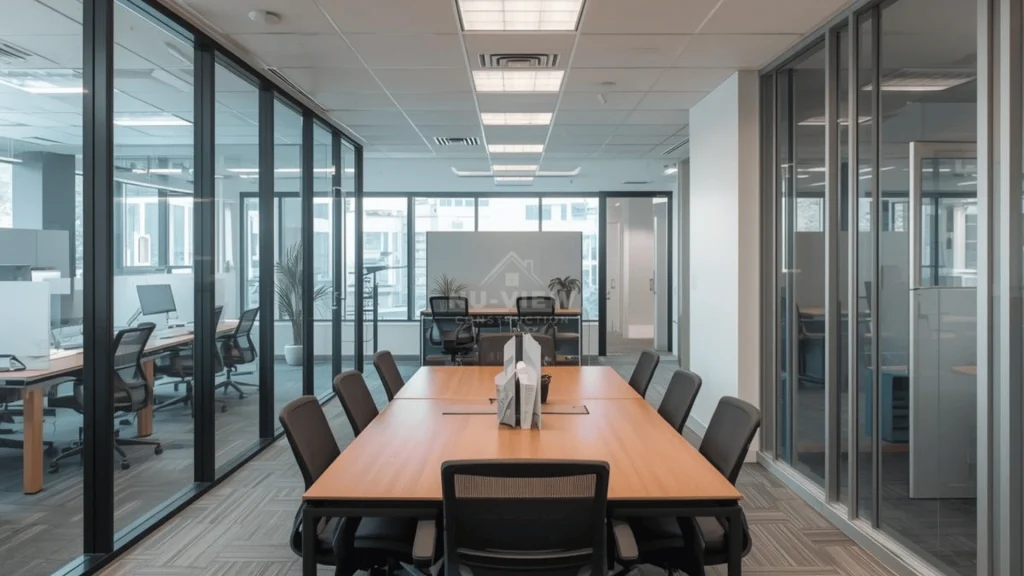
How much does an office renovation cost?
Office renovation costs vary depending on square footage, scope of work, material selection, and mechanical upgrades. Cosmetic updates such as flooring, paint, and lighting are more affordable than full layout reconfigurations involving electrical, HVAC, or plumbing modifications.
The most accurate way to determine cost is through a detailed on-site evaluation and project scope review.
Value Tip: Clearly defining your goals whether aesthetic upgrades or workflow improvements — helps control costs and maximize return on investment.
How long does an office renovation take?
Timelines depend on project complexity. Minor interior updates may take a few weeks, while full office build-outs or structural modifications can take several months.
Permit approvals, inspections, custom finishes, and coordination of trades all affect the schedule. A structured construction timeline helps avoid unnecessary delays.
Do office renovations require permits?
Most office remodeling projects require permits, especially when modifying electrical systems, plumbing, structural elements, or fire safety features. ADA compliance and local building codes must also be followed.
Working with an experienced commercial contractor ensures all approvals and inspections are properly managed.
Can my business remain operational during renovation?
In many cases, yes. Office renovation projects can often be phased to allow sections of the workspace to remain functional. After-hours or weekend scheduling may also be possible to reduce disruption.
Careful planning and clear communication ensure productivity and safety are maintained throughout construction.
What improvements increase office productivity and value?
Modern office renovations often focus on improving layout efficiency, lighting quality, sound control, and collaborative spaces. Upgrading conference rooms, break areas, and reception areas also enhances client perception.
Value Tip: Incorporating flexible workspaces and adaptable layouts allows your office to evolve as your team grows.
How do I plan an effective office renovation?
Start by identifying workflow challenges, employee needs, future growth plans, and brand image goals. Clear communication between business owners, designers, and contractors ensures the renovated space supports daily operations and long-term strategy.
Value Tip: Designing with scalability in mind can prevent costly renovations later as your business expands.
Architectural Design & Planning Questions
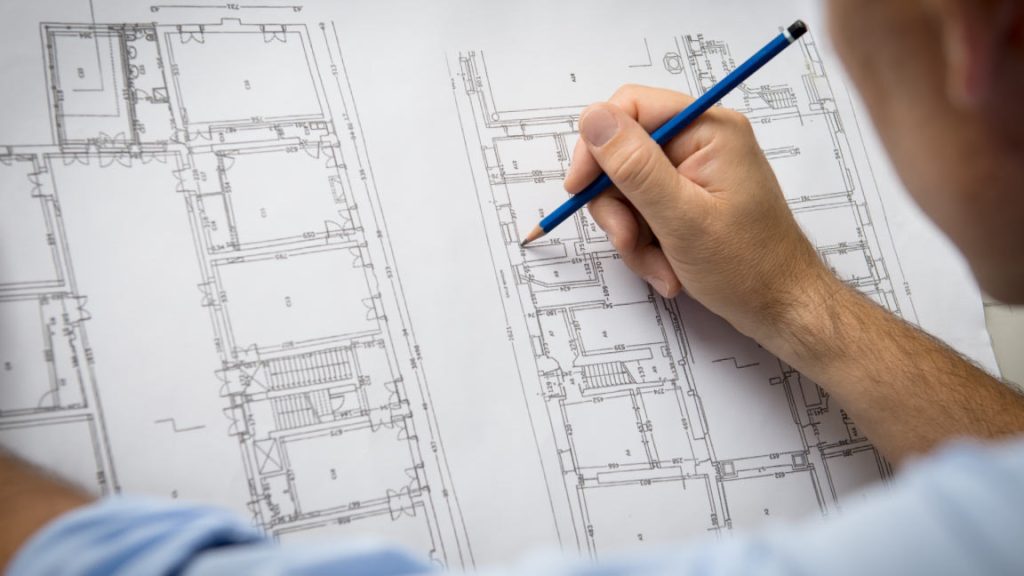
What is included in architectural design and planning services?
Architectural design and planning include conceptual layouts, detailed floor plans, structural drawings, elevations, and construction-ready blueprints. It also involves space planning, material coordination, and ensuring the design meets local building codes.
The goal is to create a clear roadmap for construction that aligns with your vision, budget, and functional needs.
How long does the architectural planning process take?
The timeline depends on the size and complexity of the project. Smaller renovations may require a few weeks for design and revisions, while larger residential or commercial projects can take longer.
The planning phase includes consultations, measurements, draft designs, revisions, and final construction documents.
Do architectural plans need to be approved by the city?
Yes. Most structural projects require plan submission and approval before permits are issued. Local municipalities review drawings to ensure compliance with zoning laws, safety standards, and building codes.
Working with experienced professionals ensures the approval process moves smoothly.
Do I need architectural plans for remodeling or additions?
In most cases, yes especially for structural changes, home additions, layout reconfigurations, or commercial build-outs. Detailed plans are often required for permits and inspections.
Even when not legally required, professional drawings help prevent costly mistakes during construction.
Value Tip: Clear architectural plans reduce change orders and unexpected expenses once construction begins.
What is the difference between architectural design and construction?
Architectural design focuses on planning, layout, structure, and visual concepts. Construction is the physical execution of those plans.
When both phases are coordinated under one team, communication improves, timelines are more efficient, and the final result stays aligned with the original vision.
Why is architectural planning so important before starting construction?
Proper planning prevents structural conflicts, design inconsistencies, and budget overruns. It ensures that plumbing, electrical systems, structural supports, and layout decisions are fully coordinated before work begins.
Value Tip: Investing time in thorough planning often saves significant time and money during the construction phase.
Concrete Construction Services Questions
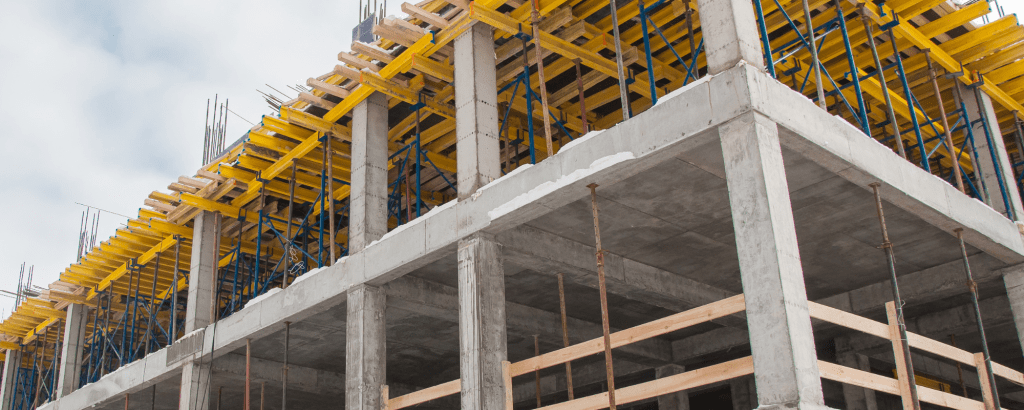
How much does concrete construction cost?
Concrete costs vary depending on thickness, reinforcement, finish type, and site preparation. On average:
Concrete slab (basic finish): $6 – $12 per square foot
Concrete driveway: $8 – $18 per square foot
Stamped or decorative concrete: $12 – $25+ per square foot
Concrete foundation: $8,000 – $25,000+ depending on size and depth
Pricing depends on excavation needs, rebar reinforcement, grading, accessibility, and decorative finishes.
What types of concrete projects do you handle?
Concrete construction services may include:
Driveways
Sidewalks
Patios
Foundations and footings
Garage slabs
Retaining walls
Stamped and decorative concrete
Commercial slabs and structural concrete
Each type requires different reinforcement, thickness, and finishing techniques.
Is stamped or decorative concrete worth the investment?
Stamped concrete offers the appearance of stone, brick, or pavers at a lower cost than natural materials. It’s commonly used for patios, walkways, and pool decks.
While decorative finishes cost more than basic concrete, they enhance curb appeal and resale value.
Value Tip: Choosing neutral patterns and colors provides longer-lasting design appeal than overly trendy finishes.
How long does a concrete project take?
Most residential concrete projects such as patios or driveways take 3 to 7 days, including preparation and finishing. Larger foundation work may take 1 to 3 weeks depending on complexity.
Concrete typically cures enough for light foot traffic within 24–48 hours, but full curing strength takes about 28 days.
Why does concrete crack, and can it be prevented?
Minor cracking is normal as concrete cures and settles. However, excessive cracking often results from poor site preparation, inadequate reinforcement, or improper curing.
Control joints are intentionally placed to guide natural cracking and prevent structural damage.
Professional installation significantly reduces the risk of structural issues.
How long does concrete last?
Properly installed concrete can last 30 to 50 years or more, depending on climate, usage, and maintenance.
Driveways and high-traffic areas may experience wear sooner, while structural foundations are built for long-term durability.
Value Tip: Sealing decorative or exterior concrete every few years helps prevent moisture penetration and surface damage.
Call us now at 267 203 4880 to schedule a consultation and let us help you turn your vision into reality we serve in Philadelphia and New Jersey.