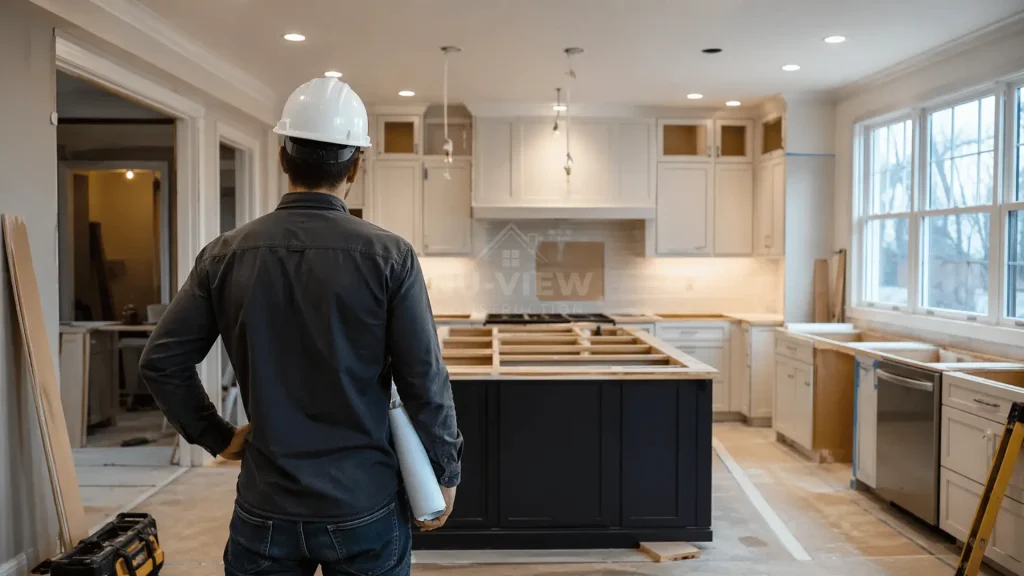





Choosing the right general contractor in New Jersey or Philadelphia can define your entire project. The difference between a smooth remodel and a costly mistake usually comes down to two things: verification (are they legit?) and process (do they run a real system?). This guide breaks down what actually matters in 2026 based on real renovation standards, regional compliance, and homeowner-proof ways to vet a contractor before you sign.
1) What a General Contractor Actually Does (so you know what you’re paying for)
A true general contractor isn’t just “a guy who knows subs.” A professional GC manages:
- Project scope (what’s included/excluded and what will trigger a change order)
- Scheduling (demo → rough work → inspections → finishes → punch list)
- Trade coordination (plumbing/electrical/HVAC/framing/drywall/tile)
- Code compliance + inspections
- Quality control (fit/finish, waterproofing standards, punch list completion)
2026 reality check: If a contractor can’t clearly explain how they run scheduling, inspections, and change orders, you’re not hiring a GC—you’re hiring risk.
Licensing & Insurance in NJ and PA
Before you pay a deposit, verify registration and ask for proof of insurance. In NJ, you can verify contractor registration through NJ Consumer Affairs tools. In PA/Philadelphia, verification often includes checking Home Improvement Contractor registration and local licensing requirements depending on scope. Always request a Certificate of Insurance (COI) showing general liability + workers’ comp.
3) Red Flags to Avoid (and the “green flags” that matter more)
Use “red flags” as a filter—but your goal is to identify green flags that predict success.
Major red flags
- No written scope (or it’s vague: “as needed” everywhere)
- They won’t pull permits or dismiss permits without checking
- No proof of insurance, or they avoid giving a COI
- Unclear payment milestones (large deposits with no deliverables)
- No schedule or “we’ll see how it goes” timelines

Green flags that predict a smooth project
- Clear scope + exclusions + allowances
- A realistic schedule with milestone phases
- Transparent change-order process (price approved before extra work starts)
- Clean communication cadence (weekly updates)
- Willing to provide verification info up front (registration, COI, references)
Check Our Blog: “Red Flags to Avoid (and the “green flags” that matter more)”
4) Cost Expectations in 2026 (how to compare bids without getting fooled)
The cheapest estimate often wins the job—and loses the homeowner.
What affects contractor pricing:
- City complexity (permits, inspections, access, parking, staging)
- Scope completeness (missing scope becomes “change orders later”)
- Material grade and lead times
- Amount of structural/MEP work (plumbing/electrical/HVAC)
Reality check using industry ROI benchmarks: JLC’s Cost vs. Value shows how a “minor kitchen remodel” can recoup strongly compared to major overhauls—useful for budget planning and deciding what level of renovation makes sense. https://www.jlconline.com/cost-vs-value/2024/
(JLC also summarizes key insights and ROIs here: https://www.jlconline.com/cost-vs-value/2024/key-trends-in-the-2024-cost-vs-value-report )
How to compare bids correctly:
- Ask each contractor to confirm the same scope (apples-to-apples)
- Confirm what’s excluded (permits? debris? plumbing reconnection? painting?)
- Verify allowance levels (tile, cabinets, fixtures)
- Look for labor assumptions (hours, crew size, sequencing)
How to Evaluate Portfolios
A legit portfolio shows process, not just glam shots.
Look for:
- Before/during/after photos (not only final photos)
- Similar home type experience (rowhomes, older homes, condos, additions)
- Finish consistency: tight reveals, straight grout lines, clean trim, aligned cabinets
- Proof they solve problems (uneven floors, structural corrections, waterproofing)
- Reviews that mention: communication, cleanliness, timeline discipline
Quick portfolio test: Ask, “Show me a project that had a complication—what happened and how did you solve it?” Real pros will answer easily.
Final Take: Hire for Process, Not Promises
The best general contractor isn’t the one with the lowest price—it’s the one with the clearest scope, verified credentials, and a proven system for planning, permits, scheduling, and quality control. In New Jersey and Philadelphia, choosing the right contractor in 2026 means protecting your budget, avoiding delays, and getting results that actually hold up over time. If a contractor can’t show documentation, provide a realistic timeline, or explain how change orders work, it’s not worth the risk. The right team will make your project feel organized from day one—and finished properly at the end.
Questions to Ask Before Hiring
Use these questions on every phone call:
- How do you verify licensing/registration for NJ or PA/Philadelphia?
(If they don’t know where to verify, that’s a red flag. Use the official tools above.) - Who is my point of contact and how often do I get updates?
- What’s excluded from your price?
- How do change orders work and when do I approve costs?
- Can you provide a current Certificate of Insurance (COI)?
- What is your realistic timeline and what causes delays?
- How do you handle inspections and closeout?
Ready to Start? Explore Our Remodeling Services
If you’re planning a renovation in New Jersey or Philadelphia, we’re here to help you do it the right way—from design coordination and permits to construction and final walkthrough. Whether you need a kitchen remodel, bathroom renovation, flooring, structural upgrades, or a full home transformation, our team delivers clear scopes, reliable scheduling, and high-quality craftsmanship.
Our Blog
home remodelers, general contractors near me, remodeling contractors in my area, contractors for home repairs, home improvement company near me